
It is time the government cast its net wide for seeking expert advice on managing the Indian economy and formed a group to help it navigate the difficult days ahead, advises A K Bhattacharya.

Every time the Indian economy has faced headwinds due to international developments, the oil sector has played a crucial role, explains A K Bhattacharya.
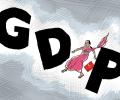
'Given that the economy is going through a slowdown, further downward revisions of the 2019-2020 growth estimates cannot be ruled out,' notes A K Bhattacharya.
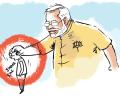
'Instead of wailing about the absence of tax benefits, the private sector should press for an early implementation of the package of measures,' advises A K Bhattacharya.

'As much as $4 billion in India's start-up companies has come from Chinese funds.' 'Government policy must not remain indifferent to the problems India's start-up ventures are likely to face after the change in FDI rules,' says A K Bhattacharya.

'The impact of COVID-19 on the economy has been so overwhelming that even a significant drop in global oil prices, which in normal times would have brought cheer, has posed new challenges for the government,' observes A K Bhattacharya.

'How the lockdown is phased out or lifted will tell us if the government has succeeded in its battle against COVID-19.' 'If it cannot sequence its decisions on exiting the lockdown, the few gains secured so far may be frittered away,' says A K Bhattacharya.

'So far, no government has imposed a financial emergency in the country,' notes A K Bhattacharya.

'Even before the outbreak of the flu, it had become clear that the tax revenue numbers for 2019-2020 were overestimated,' observes A K Bhattacharya.

The government should have mentioned clearly the specific structural reforms that were responsible for the deviation from the fiscal deficit target by half a percentage point, says A K Bhattacharya.

'Air India's privatisation is acceptable as long as its control does not pass on to a foreign entity,' says A K Bhattacharya.

'The Modi government is trying hard to see if it could be sold to a private airline.' 'But it appears there are no takers.' 'If no buyer comes forward by June, the government will close down Air India,' predicts A K Bhattacharya.

'What stood out at these meetings between industry representatives and government leaders was how the equation between the ministers and industry had undergone a subtle and qualitative change,' points out A K Bhattacharya.

In fact, no other recent Union Budget has held so much significance for the Indian economy as the one to be presented in about six weeks from now, notes A K Bhattacharya.

'A close relationship between India Inc and the government cannot help the BJP win elections.' 'While Opposition parties may feel good about Mr Bajaj criticising the Modi regime, the BJP should be seeing the indictment as a political boon,' says A K Bhattacharya.

'Mr Modi would compliment a Nobel Prize winner, but members of his party or the government would not be restrained from either making unfair comments or criticising him for having offered advice to an Opposition political party,' says A K Bhattacharya.

'If more than 60 commissioner-level tax officials were compulsorily retired in the span of a few months, surely the malaise is far deeper,' notes A K Bhattacharya.
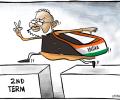
'If the current mood in North Block, headquarters of the finance ministry, is anything to go by, the government will now keep a closer watch on all kinds of schemes and projects undertaken by different central ministries. 'The next six months will determine which central schemes will have to be wound up and which ones will survive the axe,' says A K Bhattacharya.
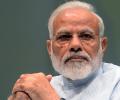
'The Modi regime is not willing to use its huge political capital for taking any economic policy measure that it fears might undermine that political strength, says A K Bhattacharya.

